Doping in Ultra Running


I’ll just lay all my cards on the table right away in regards to doping in trail and ultra running: I am maximally cynical about the sport as a whole. Currently, trail running is in a place where professional athletes can expect to make a decent living and face little to no drug testing in their careers. Just to use myself as an example, I am financially better off than I ever would have expected to be as a professional ultra runner, and I have been drug tested exactly zero times. The incentive structure is completely misaligned for what we would call “clean sport.” At the same time(!) I am determined to be maximally charitable to any given individual until proven otherwise. These two ideas are not mutually exclusive. The former is, I would argue, simply obvious given the facts on the ground of money available with no universal testing regime. The latter is an outlook I want to have throughout my life, in everyday situations and in sport.
As charitable as I am inclined to be, again, to any individual until proven otherwise, if I could wager in an omniscient casino, I would be willing to put a lot of my money on a bet that doping is absolutely rampant in the world of trail and ultra running.
I do want to take a second to linger on definitions because the words we have available to describe individual situations often fail us. The word “doping” in sports is akin to the way society uses the word “drugs.” Drugs can range from ibuprofen to heroin. And the way doping is used can range from accidentally taking a tainted supplement to team-sanctioned use of erythropoietin (EPO). Having just one word to describe such a wide range of potential actions is, to put it mildly, not particularly conducive to nuanced discussion.
So for the purpose of this article, and with the intention of hoping to highlight what I see as massive gray areas in the discourse, I’m going to define the moral sin of doping as:
The use, accidental or on purpose, of a substance with a substantial evidentiary basis that it improves performance
If you’re going to write this off because “he’s just making up definitions for his own purposes,” I hope you will keep reading because I aim to explain why this clearer definition of the term will serve to add to the discussion without further inflaming what I view as extreme views on both sides of this issue.
Cam Hanes, Mike McKnight, and Peptides
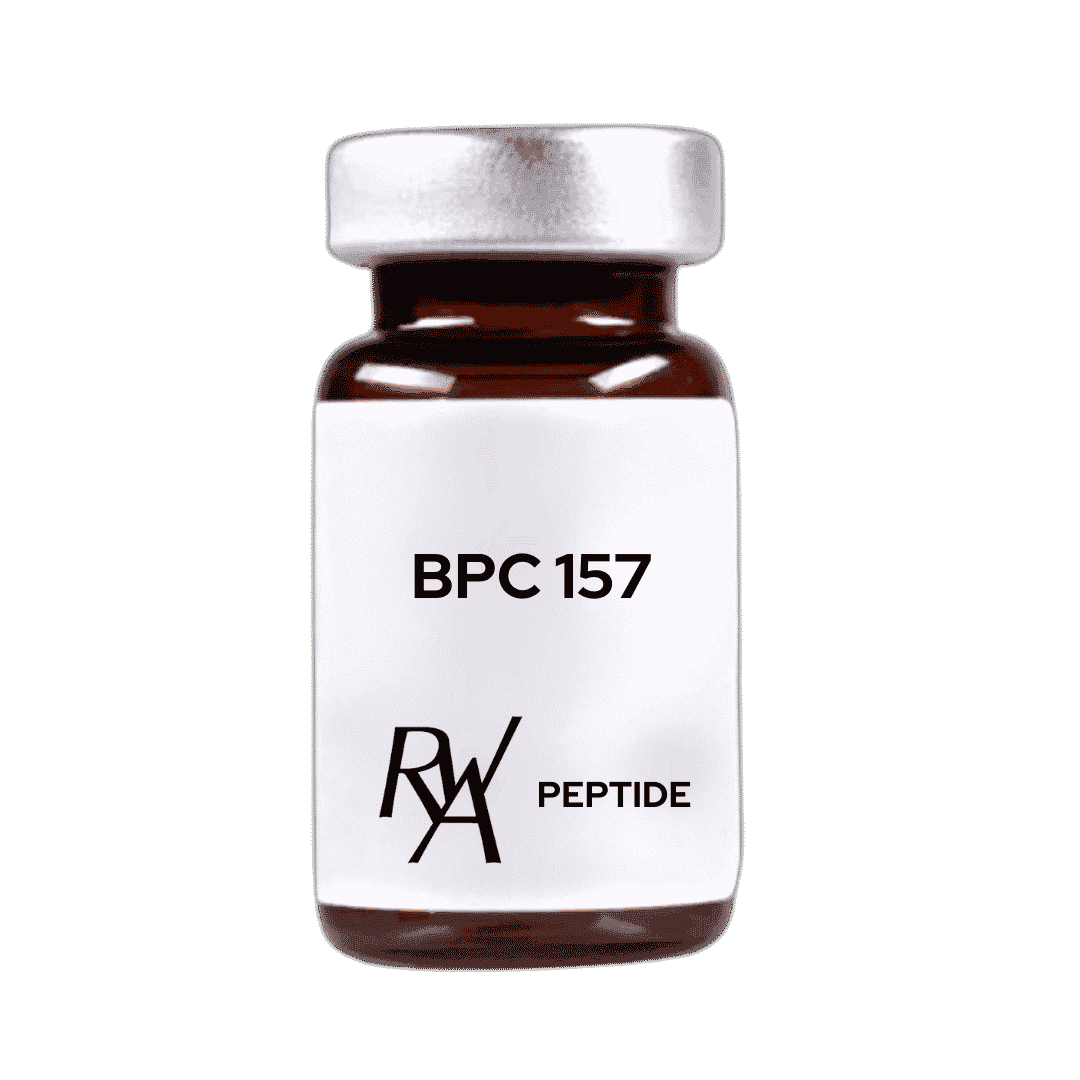
After Cocodona this year, Cam Hanes was criticized publicly (albeit technically indirectly) by Sage Canaday for taking the peptide BPC-157, a banned substance under World Anti Doping Agency (WADA) rules. In Cam’s situation, I didn’t see much merit to the criticism. Cam isn’t trying to be competitive, except with himself. If someone is racing in the mid or back of the pack, I really don’t care even if they are juiced to the gills (not to imply that’s the case with Cam). And so I didn’t really see why his case blew up to be a controversy at all. He was honest about it, and from what I heard in his podcast after Cocodona, he wasn’t flat out recommending BPC-157 to others, but was just saying that he thought it helped him avoid surgery on a broken foot. I don’t see a problem with any of that.
Recently, Cam had Mike McKnight on his podcast where Mike proceeded to also admit to using BPC-157 in order to avoid back surgery. Once again, Sage posted public criticism of Mike without using his name, stoking the fire of what was already sure to grow into another controversy.
Mike and Cam’s cases are different in some important ways:
Mike is explicitly aiming to be competitive at the events he is entering
Mike also said that he had recommended BPC-157 to athletes he coaches
When I first became aware of this situation, my first feeling was betrayal. I recently had ankle surgery and I specifically did not allow myself even to look into or think about the possibly use of BPC-157 because I knew it was on the WADA list of banned substances. My first instinct was that, regardless of claimed ignorance regarding WADA’s list, Mike should have done his due diligence and if he wanted to continue competing, gone ahead with the surgery.
However, after taking time to think about the differences in our respective situations, I have arrived at a rather different conclusion. My surgery had a 95% success rate for returning to the previous level of activity. I don’t know what kind of ratio Mike was looking at. Suppose it was 70-30 or 50-50, perhaps I would have also been inclined to look at other options. Furthermore, I realized I actually knew basically nothing about BPC-157 other than the fact that it is on WADA’s list, which is, as a matter of fact, imperfect. THC is on WADA’s list of banned substances. Why? Well, the answer for that is complicated by the fact that WADA’s own list of criteria for what gets a substance on the banned list is convoluted. WADA has three criteria for which, to be banned, substances must meet two of three. These are:
It has the potential to enhance or enhances sport performance.
It represents an actual or potential health risk to the athletes.
It violates the spirit of sport.
THC isn’t a performance enhancing drug and so its presence on the list must rely on the other two criteria. I’m not so sure it’s obvious, given that THC stays in the system long past when any individual might actually be feeling the effects, that failing a test for THC in any way violates the spirit of the sport. If an athlete was competing while intoxicated I can see the argument against that, but at the very least we’re in an area where the merits of whether or not something should be on the list are debatable.
So what do we know about BPC-157 and its potential as a PED? The answer is very little. A 2025 systematic review of the compound identified only 36 total studies, 35 of which were conducted on animals and just one single study (with a sample size of 12!) conducted on humans. Right off the bat, it’s startling how little information is available about BPC-157. The best evidence available is that BPC-157 results in “improved outcomes in muscle, tendon, ligament, and bone injury models in animals.” There are probably trials ongoing, but if we are being honest about the totality of evidence available to us right now, it is irresponsible to claim either way that BPC-157 does or does not increase performance. We simply do not know. In regards to WADA’s criteria, BPC-157 probably crosses the threshold for the second due to the lack of information we have about it, but I think it is hard to argue that we know enough for it to meet the first and third.
Just for comparison’s sake, lets look at perhaps the most well known PED: erythropoietin, better known as EPO. A 2025 systematic review found:
After analyzing 985 resultant articles and 5 records identified outside of the databases through citation tracking, 10 studies that met the inclusion criteria were included in the systematic review. We found that, regardless of the total dose of rHuEPO used, this substance improves the main hematological (total hemoglobin mass, hemoglobin concentration, and hematocrit) and physiological (maximal oxygen uptake and peak oxygen uptake) parameters, while the maximal performance-related parameters (mainly, maximal power output, and peak power output) also tend to increase.
In layman’s terms, EPO freaking works. It hits all of WADA’s aforementioned criteria for a banned substance.

It’s worth noting that only 10 studies made it through the review’s criteria, but the mere fact that there are at least 985 different studies looking at EPO shows how wide the gap is in evidence when compared to something like BPC-157. WADA, for better or worse, does not require substantive evidence to include substances on its banned list.
It’s this difference between BPC-157 and a well-studied PED like EPO that made it worth defining what I mean by “doping” right away. Even though BPC-157 is on WADA’s list, no one, including Mike McKnight, knows whether or not he gained a competitive advantage by taking the peptide.
I’ve seen people arguing something like “well, it’s on WADA’s list for a reason.” This is a classic example of the rhetorical fallacy of appealing to authority. To illustrate what I mean by this, picture Martin Luther King Jr. MLK knew he was breaking the letter of the law and expected his civil disobedience to put him in prison, which it did. Morally speaking, I think anyone reading this article can recognize that the letter of the law was actually in the wrong during this perverse era in American history. But imagine the same person saying “well, I’m sure it’s on WADA’s list for a reason,” saying in the 1960s, “I’m sure Jim Crow laws are in place for a reason.” Does that make any sense to you?
To be crystal clear, I’m not comparing these two situations, I’m using the MLK example to illustrate that seemingly authoritative bodies are often wildly off base both logically and morally with the conclusions they make.
Returning to peptides and clean sport, I doubt very much that Mike set out to gain an advantage over his fellow runners. Put yourself in his shoes for a moment. Mike said in an Instagram story that he was told by his doctor that the longer he waited to make the call on medical intervention, he was risking further nerve damage. He’s living each day with significant pain, unable to do the thing he loves most—which is run—and is being told that his only option is surgery. Facing down the prospect of going under the knife, which always accompanies some measure of risk, he made a different decision and decided to give BPC-157 a try, which, in his accounting, he was unaware at the time was on WADA’s banned substances list. Can’t you empathize with the decision? I just faced a similar, although not identical, situation, made the opposite decision, and I can absolutely see why Mike went the other direction.
Much more ethically questionable to me, is Mike’s admission that he recommended BPC-157 to other people. To be as charitable as possible, I can absolutely imagine the type of conversation for which I would not be willing to question his judgment. If Mike said something along the lines of “I tried BPC-157, this is why I used it, and this is what it did for me,” I wouldn’t find that particularly problematic. If, however, Mike flat out recommended the peptide by saying something like, “I think you should take this,” I would find that ethically dubious. With how little we know about the experimental compound, it’s long term effects, potential negative side effects, etc., I do think it would be irresponsible to recommend it to others, especially athletes one is coaching. But all that being said, I do not know the content of these conversations and so am only speculating on the potential ethics of the complicated situation.
Once again, in the interest of transparency, I want to be upfront about my biases: I am friends with both Cam and Mike and that could certainly be influencing my views about this situation. I respect Mike, and none of his actions in this brouhaha have changed the way I view him as a friend, person, or competitor.
That being said, I think there’s a spectrum of reasonable reactions to be had to this situation, none of which are “Mike is totally innocent,” or “Mike is a cheater.” It’s fair to say that Mike should have been aware that BPC-157 was on WADA’s list of banned substances. But it is also outrageous to claim that “Mike McKnight is a doper,” without qualifying that statement with caveat after caveat. Neither Sage Canaday or Mike McKnight (or even WADA, for that matter) know if BPC-157 is a PED. Mike broke the rules that we all tacitly and explicitly agree to and I would be surprised if he doesn’t face some kind of consequence for doing so.
But I think it’s quite possible that we will look back at this supposed scandal as the beginning of a significant evolution in the way sports view serious injuries. Imagine the possibility for a moment that BPC-157 is completely safe, does not act as a PED long term, and can help athletes across a variety of disciplines avoid risky surgeries and ultimately prolong their careers. Wouldn’t that be a good thing? Wouldn’t we as a collective sporting world look back on this conversation and think about it differently? I certainly think that future is possible and I think it is likely that, relatively soon, we will have a protocol approved by WADA and other agencies to allow athletes to use peptides to recover from injuries.
It’s also equally possible that in 30 years time we’ll find out that BPC-157 causes cancer, or brain damage, or heart failure. We just don’t know.
Hypocrisy and the Bigger Picture
One of the aspects of this narrative that has irked me from the start is that many pundits who are willing to criticize Mike by calling him a “doper” and condemning him as a cheater, have never once touched the larger conversation of doping within the sport. Like I said right at the top of this article, I am willing to bet big time that huge names within the sport are cheating. I’m not talking taking experimental peptides to avoid surgery, but EPO, Lance Armstrong-style cheating. Humans respond to incentives, and almost all of the incentives in the sport right now are aligned against clean competition.
Francesco Puppi, recent podium finisher of the Western States 100, wrote a thoughtful piece about the state of drug testing in ultras following the high profile test failure of Joyline Chepngeno in 2025. In it, he provides a list of major organizations along with their anti-doping policies, which to put it bluntly, leave a lot to be desired. Even Chepngeno’s case comes with some caveats, in my view. She failed for an injectable corticosteroid, taken for knee pain before the race. Sounds bad. But corticosteroids cover a wide range of drugs, one of which is prednisone.
During Cocodona of this year, I took prednisone before heading up Mt. Mingus to help prophylactically ward off the allergy-related breathing problems I had faced in years past and sucked down some puffs from my inhaler with regularity. Before the race I contacted Aravaipa to inquire about the potential need for a therapeutic use exemption (TUE) for these medications and was told that I didn’t need one. Did I do something wrong during the race? I don’t think so, and I did my due diligence. But it was the same category of drug for which Chepngeno lost her career. Even seemingly clear cut cases can involve shades of gray.
My broad point in this article is that humans are remarkably tribal about everything under the goddamn sun. We should all want a more robust anti-doping policy in trail and ultra running and we should want the incentives to be aligned with clean sport. Why don’t I ever hear any pundits talking about this large problem, instead of focusing on the super gray area case of Mike McKnight taking an experimental peptide to avoid back surgery? How is this possibly a good use of our time as a community if our goal is actually to establish norms for fair competition?
Even with establishing norms, however, there are clear trade offs. I don’t want to be subject to the same type of testing regime that Olympic athletes undergo. It sounds so inconvenient and annoying. Is there a middle ground between the completely onerous and sometimes laughably ridiculous surprise arrivals of the piss police at your door on a random Wednesday morning, and the near free-for-all, Wild West of trail running? I’m not sure. Maybe there is a way to incentivize sponsors to test the athletes on their own teams. Maybe we need to sacrifice some of what makes trail running unique and fun and come together to form a worldwide governing body that can administer a testing regime.
Once again, I want to reiterate that I am maximally cynical regarding the sport as a whole but maximally charitable regarding individuals. There are people at the top of the sport that I suspect more than others, but until there is proof, I am willing to celebrate anyone’s achievements. But it is patently absurd to act as if all violations of WADA’s sometimes arbitrary banned substances list are all the same. Mike McKnight taking BPC-157 is not on the same level as Tour de France riders taking EPO, and we shouldn’t pretend these things are simply black and white.
Thoughtful and well-written. I just noticed that one hour after sharing the post on Instagram, you have 102 comments there but only 11 here. My guess is the majority of Instagram scrollers didn’t actually read this post, they only gave their hot take on the topic. That drives me nuts! I wish more people would take the time to read before commenting.
Why do you not care if mid or back-of-the-pack athletes are “juiced to the gills?” What if those athletes who are being beaten by the dopers care? Seems like an elitist view that the non-pro field doesn’t need to be clean. I’m glad you’re thinking about this topic and I hope you continue to do so. Room for improvement.